In Affirmation of Rapid Rail Transport in the USA, Part One
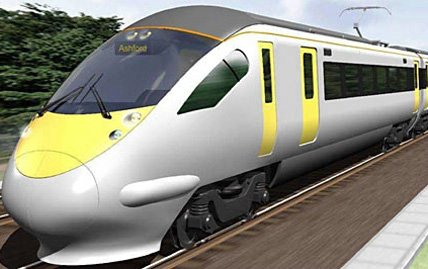 As a kid, my family and I built model train sets…Lionel trains of the O model designation. It started with a single circular loop, one engine, a few cars, a small little station, some trees and grass, and a low power transformer, all laid on top of an 8′ by 4′ wood platform. But as we got a little older, the thrill of the model train set grew and we started collecting more and more trains, used and old, and in the meantime, managed to build two very large train sets that were expansive and let our imaginations run wild. My dad loved being a designer of sorts and for a very long time, it was one of the staples of our family traditions…friends, neighbors, and all family loved it and my brother and I would create scenarios of fun and chaos on the train set every day. As I moved into high school though, the excitement of the hobby wore off a bit (we still collect trains) but my feeling about mass transport and it’s impacts on society have grown in a very large way as a result of my fascination with trains from an early age.
I have had the great fortune of traveling to beautiful countries, big and small, in the past five years of my career. Being on the road a lot has exposed me to the joys and horrors of transportation from one city to the next (don’t dare fly Ryanair unless you enjoy sitting on a tarmac for three hours after landing at an airport that is supposed to be a part of a major city but happens to be 70 minutes out of the center, and by the way, you’ll never get your bag returned to you). I’ve written about air transport and some tricks I’ve learned over the last several years but I haven’t discussed more regional, rail transport. Loving trains since I was a kid, I’ve always dreamed of a system in my country where my fun scenarios that I would envision alone at night on our play set, would become reality someday. But in the US, it’s far off and perhaps not even viable. But what if it were? What if the US could adopt a truly efficient rail transportation system that could change the dynamic of mass transit for good? How could it be possible? Would people use it? Is there a stigma against rail transport in America that is unresolvable? Obviously, the two issues that stick out the most when talking about mass transit are the costs associated with executing and delivering it, and it’s comparative efficacy around the world.
The costs of the current system are astounding. In Fiscal Year 2012, Amtrak, the national rail company received over 1.4 Billion dollars in federal funding and grants that went towards its’ operations and modernization programs. The incredible subsidy is even more astounding when one realizes that Amtrak lost a billion dollars last year. Amtrak spends nearly a billion dollars a year just on salaries and benefits to all of its employees. Last year, Amtrak managed to create a high water mark in company revenues and yet still had the agony of being severely in the red and then publicly lamented the lack of additional subsidy and support from the Federal Government. Groups that advocate for public transport, specifically rail, have argued that the subsidy should be doubled or tripled, citing the extensive government grants given to build interstate highways and regional motorways. They further argue that public financed and owned rapid transportation has serious tangible benefits that can’t be seen today in America but could be if given the chance and use Japan, Germany, France, the UK, and now China as the primary references.
Before running down the comparative analysis of the different systems in Europe and Asia, let’s address what exists at home. I, in no way, mean to denigrate any segment of the working public in this discourse but rather seek to open a discussion to the ups and downs of rail transport as it stands today. Amtrak operates a wide network across the US. It has a few primary bases, namely Penn Station in New York, Union Station in Chicago, Union Station in Washington DC, and Union Station in LA. There are others but these are the primary connecting points of transit. With the exception of the Acela High-er speed trains that run from DC to Boston on a multi-daily service, Amtrak trains average 79 mph on a good day. The service on the older, out of date cars, is rickety, often not well cleaned, with interiors that look so dated that we could be in a 70’s bordello, and run by conductors that don’t always act like angels (some do). You want to buy a sandwich, fork over $8.50. Diet Pepsi, $3.00. You want to use the restroom, likely half of the toilets on the train are inoperable. Unlike the airlines, Amtrak has introduced free wifi on its trains and now it’s on nearly all cars. The service is still with its kinks but its better than nothing. Some trains offer quiet cars, something not available on airplanes, and a welcome repose to the loud mouthed individuals who have to scream their life stories into their phones to their best friend that they will be seeing in 30 minutes. Fares on simple runs between cities like Philly and NYC are highly variable and the trains can range from being nearly empty to so packed that there aren’t even seats available for sitting. (Imagine getting off a 10 hour international flight to take a train from Newark to Philly and having to stand with your luggage at hand in the aisle for $109 for over an hour with passengers exiting, entering, and grumbling that you’re in their way). The service is in general very poor and the company is in my view, highly mismanaged, without the customer’s interests in mind and clearly not focussing on their bottom line. Amtrak tried to allay some of the concerns of business people 12 years ago by introducing the popular Acela Express trains that run from DC to Boston very often…the trains have the ability to run up to 135 mph (220 kmh) which isn’t that bad but because they share the same track with the regional standard trains, they are subject to delays, slow downs, and often don’t travel above 100 mph. They are somewhat more comfortable, quieter, modern, the toilets work, and thus vastly more expensive. The Acela line is one of only a few that actually makes money. Amtrak has a wide network country wide of regional trains that lose money daily and are derided by most for poor, overpriced service, severe delays and/or major cancellations because of older tracks that don’t work.
So why is Amtrak suffering, what can be done to fix it, is it fixable, and should we fix it?
First, we should look to other countries that use rail transport as their primary mode of transport. Recall that train stations in Europe often are at the epicenter of primary cities. Businesses flourish in the areas of train stations as they are not just transport hubs but hubs to the city at large. In America, our country never adopted a rail transit FIRST method even when train track was laid so many years ago across this great land. In 1956, when the Highway Act was introduced, we bypassed the opportunity at laying thousands upon thousands of miles of new tracks instead to build motorways, as at that point, the automobile was reaching a saturation in American society never seen before. Automobiles were, are, and will always be an American icon and they should be. Also, where we have to accept that since the train systems that were built in Europe were built strategically over time, we have to acknowledge that that has not been the case in the states. The cost to rebuild the map of train transit all over America in itself today would be massive and decisively more difficult than in Europe or Japan. With all these hindrances, we still don’t have an overarching reason why we can’t take a stab at it in the states.
France, with their TGV system, figured out how to build an enclosed high speed rail space in targeted lands and property for transit all over their country, even in densely populated areas. The TGV, which debuted in the early 80’s, is one of the fastest trains in the world, unprecedented at the time of its inception and still highly regarded today. The French Government has since funded the expansion of the fast lines and regional lines and rail transit is a staple of French Transport with high respect from their countrymen. In France, the government sponsored train systems has its ups and downs; it has run into serious financial problems in the past and fares for passengers can be far more volatile than fares for passengers in the US. But the system works. The trains are comfortable, they tend to run on time, and they are generally well linked from city to city. By connecting high speed transit to air transport hubs, the French have figured out, mainly, how to comfortably move mass amounts of people quickly between major internal cities. (Take the TGV from CDG airport to Nancy direct without having to connect…a real breeze). The Germans have their ICE and IC trains that also run in a similar fashion. No need for further explanation here. Their system has had its financial ups and downs too, but it is run generally efficiently in comparison to the US and its publicly financed. The volatility with their systems financially, however, is troubling, and justifies the concerns of many in the US.
The UK is the story that America could emulate and find a pattern to base itself. In 1993, the UK, under a Tory government, privatized the rail industry. At the time, the government was highly divided on taking rail away from the government and splitting it into Private Corporations. Brits today know some trains companies, like First Great Western and Virgin Trains, for instance. The Tory government insisted that privatizing rail in the UK would change rail transport for the good; when private industry would run the trains and the lines themselves, the trains could have a greater potential of running on time; train companies who would be forced to compete with each other would in effect help the consumer because competition is good for the marketplace; private industry controlling the rail meant that leaders of companies would be subject to less governmental bureaucracy in the hiring of too many unnecessary and redundant jobs, repetitive regulations, and time wasting, all of which was wasting money. The Labour party, lead by Mr. Blair made an early attempt in 1997 to stop the final steps of shifting the system but ended up allowing it to move to a fully private industry as there was no way to stop the process and concurrently, he saw the benefits to keeping the switch in place. And after 15 years of private service, the results are in and they are positive with some areas for concern. Fares on average are lower for passengers since full privatization took place in ’97. Today, over one billion passengers travel on UK rail and now, this year, the most ever in the UK’s history. Before it was privatized, there were far fewer passengers (50% fewer in the year prior to privatization). Options to the consumer are greater because companies have the ability to offer many alternative routes, something that the nationalized system didn’t have the flexibility to do before. Customer service has generally improved as the market has forced competing companies to offer better products to the consumer. The laying of new lines now commences more rapidly, most often on the dime of private companies, something Parliament rarely authorized or took long periods to deal with (look at the debacle linking the center of London to Stansted Airport). Private companies are making, on the whole, a profit and the lines and enterprises that aren’t successful are being closed and relinked/reopened by companies that are succeeding. That’s called a free, open market that works; something the US can emulate, take pride in, and accept. These are all wonderful things. The private system does also have some concerns that must be addressed. Since private industry took over, the UK instituted a new commission for competition fairness as to protect both the passengers and the companies from creating oligopolies, monopolies, and price gauging. Often, the larger organizations have been known to scheming smaller train companies into very high lease rates for train engines, cars, and materials, and the operation of rail lines, forcing a competitive disadvantage to certain enterprises, and pushing them out of key markets or worse yet, out of business entirely. Again, the free market at work. The commissions haven’t done enough to prevent this misuse of power. A true open marketplace should allow fair competition, not bullying and oppression. The delivery of on time trains is also troubling; as a hallmark of the deal to privatize the system, it was promised that more efficient travel would be the result and in fact, more trains lines have delays than did 15 years ago. Cough it up to a non-unified network system and many out of date tracks that were built pre-war and now are seeing their last days. Another massive problem is that because of competition, various train companies often call in different stations, in the same city and thus make it very difficult for critical connections to other cities. Trains departing London to the west, call from Paddington, some trains to the north, call from Victoria or others. If one wants to travel from the North to the south west, migrating between stations is now more assaulting than ever. Before, this was less the case (though it was a problem then to a lesser degree). Now, the Labour party, headed by Ed Milliband, and the Greens are calling for a return to nationalization on the grounds that efficiency has a greater chance with a centralized control of the system. I’m sure their intentions are good but they are wrong as the overall benefits of privatization have surely trumped a floundering public centrally operated system that was losing money and had far fewer passengers. Sure, the government authorizes subsidies to private enterprises as does the American government, but today, British travelers have more options, more flexibility, lower fares, more comfort, and perhaps the densest rail transport system in the world. Before privatization, this wasn’t the case. All around, rail transport in the UK is better today than it was 15 years ago.
In order to explain how to solve the American problem, I’ll argue that to make rail transport work in America, we have to privatize it and incentivize it on a totally new scale. Privatization works. The UK will figure out it’s kinks in the system over time and they should keep calm and carry on. The American Rail System can be something with which we hold pride and joy. It can be effectuated properly without the entanglements of governmental control. There is a middle ground that in today’s political climate, no one is willing to navigate and that is the greatest pity of all. Our leaders are not seeking common ground because they are insisting on holding true to their rigid values and not seeking to find unity in a populace that so desperately needs it more than ever. They rely on each others’ lack of results for their own success and in turn, the population suffers. Rail Transport is needed in cities and towns that have seen air transport dwindle as airlines have merged or exited the market. Rail transport brings economic support to communities that are floundering. Rail transport can be a platform for employment. Rail transport is a comfortable alternative to the complex and hassling event of flying. All of this doesn’t have to be on the government dime. It can be done by a cohesion of private industry and government working together; by cutting down regulations of land usage and union by-laws, and by being creative with our resources at home, rather than importing steel, and other goods from abroad, and by working with private American industry to develop new methods of rail transport. My next posting will be about the solutions to our American rail dilemma, what we should be doing now, and why our government is failing us on the simple grounds of transportation, something that is so essential to a functioning, effective social system. More soon.